
Minnesota sports betting remains unavailable through any state-licensed platform in 2026. Despite years of legislative effort, including multiple proposals introduced across both chambers of the Minnesota Legislature, no bill has successfully passed into law. The deadlock between tribal nations seeking exclusive control over sports wagering and horse racing tracks demanding a share of the market has stalled every proposal since 2019.
The latest legislative push centres on Senate File 4139, introduced March 4, 2026 with bipartisan co-sponsorship, and its House companion HF 4204, introduced March 12. Like earlier sports betting proposals before them, both bills envision a tribal-controlled model with up to 11 licenses.
In the absence of regulated options, Minnesota sports betting remains a developing story at the Capitol with no resolution in sight. Minnesota also lacks regulated minnesota online casino platforms, leaving offshore operators as the primary access point for both sports wagering and digital casino gaming.
Meanwhile, prediction markets from platforms like Kalshi and Polymarket have entered the state through a federal regulatory loophole that state legislators are now attempting to close. The sections below examine is sports betting legal in minnesota, the legislative history behind repeated failed bills, the offshore platforms currently accessible to Minnesota residents, and the alternative wagering channels that have emerged in the state’s regulatory vacuum.
Offshore Platforms Available To Minnesota Residents At A Glance
With no state-regulated sportsbooks or online casinos operating in Minnesota, several offshore platforms have filled the gap. The table below outlines five such platforms currently accepting registrations from Minnesota residents. Two of these operate full sportsbooks, while three are casino-only platforms operated by the same parent networks.

Live betting + racebook for Minnesota players
⭐⭐⭐⭐⭐ 4.9 / 5.0

Early lines among Minnesota sportsbooks with 25+ sports
⭐⭐⭐⭐½ 4.5 / 5.0
Sub-hour payouts among Minnesota sportsbooks with 30+ sports
⭐⭐⭐⭐ 4.4 / 5.0
Top-rated Minnesota sports betting app expected upon legalization
⭐⭐⭐⭐ 4.1 / 5.0

Largest US sportsbook with Minnesota online casino expected at launch
⭐⭐⭐⭐ 4.0 / 5.0
Is Sports Betting Legal In Minnesota?
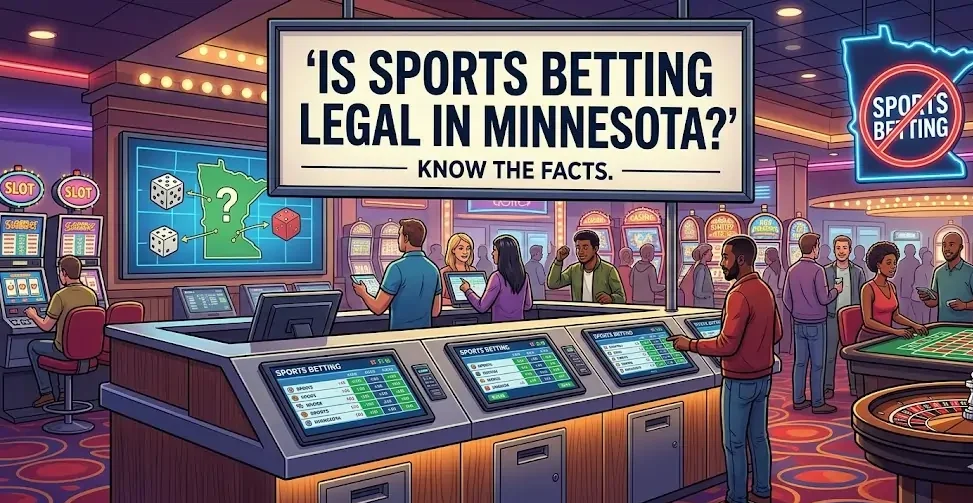
No. As of March 2026, no form of regulated sports betting, online or retail, operates within state borders. Minnesota remains one of approximately 10 states that have not legalised sports wagering since the U.S. Supreme Court overturned PASPA in May 2018.
The current legal framework permits only limited wagering: horse racing at Canterbury Park and Running Aces, pari-mutuel simulcast betting, the Minnesota Lottery, charitable gambling (pull tabs, bingo, tipboards), and daily fantasy sports. Minnesota statutes under MN § 609.75–.76 classifies unauthorised sports wagering as illegal, though enforcement against individual bettors using offshore platforms has been virtually nonexistent.
The state’s tribal nations control all casino gaming through 19 casinos operated by 11 federally recognised tribes under compacts that do not expire and require no revenue sharing with the state. This gives tribes significant leverage over any gaming expansion.
When Will Minnesota Legalise Sports Betting?
No confirmed date exists. The earliest realistic path requires passage of SF 4139 or HF 4204 during the current 2026 session, followed by a regulatory buildout period of 6–12 months. If passed in 2026, licensed sportsbooks would likely launch in mid-to-late 2027. However, the 67-67 House split and unresolved tribal-racetrack conflict make even 2026 passage uncertain.
Is Online Sports Betting Legal In Minnesota?
No. Online sports betting is specifically prohibited under current Minnesota law. No state-licensed mobile sportsbook apps or websites exist. The only legal forms of online wagering are daily fantasy sports contests and pari-mutuel horse racing simulcasts through platforms like TwinSpires and TVG. SF 4139 and HF 4204 would both authorise mobile sports betting through tribal-licensed platforms if passed.
Minnesota Sports Betting Legislation Updates And Timeline
The legislative history is a story of repeated near-misses. Multiple bills have advanced through committee only to collapse under the weight of competing stakeholder interests.
- May 2018: Supreme Court overturns PASPA, opening the door for states to legalize sports wagering nationwide.
- 2019: Senator Roger Chamberlain introduces SF 1894 to legalize sports betting at casinos and racetracks. The bill stalls in committee.
- March 2022: HF 778, sponsored by Rep. Zack Stephenson, passes the Minnesota House 70-57 and clears the Senate Finance Committee 5-4 before dying at session end.
- May 2023: SF 1949 and HF 2000 advance through multiple committees but fail to reach floor votes before the legislative session concludes.
- 2024: Three bills, SF 5330, SF 1949, and HF 2000, are introduced. None pass before the session ends May 20.
- January 2025: Senator Jeremy Miller introduces the Minnesota Sports Betting Act 3.0, proposing up to 11 tribal licenses with a 20% tax rate.
- February 2025: The bill fails to advance past its first Senate Committee hearing.
- March 4, 2026: Senate File 4139 is introduced by Senator Nick Frentz with bipartisan co-sponsorship from Republican Senators Jeremy Miller, Eric Pratt, and Julia Coleman.
- March 12, 2026: House File 4204, a companion bill, is introduced by Rep. Frazier. For the first time in the 2026 session, both chambers have active sports betting legislation simultaneously.
The core obstacle across all Minnesota sports betting bill proposals has been the conflict between tribal nations seeking exclusive control over mobile and retail wagering and the state’s two horse racing tracks, Canterbury Park and Running Aces, which want a share of the market.
| Field | Details |
| Is Legal Sports Betting Available? | No, MN sports betting remains unregulated |
| Latest Bill | Minnesota sports betting bill SF 4139 (Senate, March 4) and HF 4204 (House, March 12) |
| Expected Timeline | 2027 at the earliest |
| Offshore Options Available? | Yes, sportsbooks and casinos |
| Tribal Casinos in MN | 19 casinos operated by 11 tribes |
| Minimum Gambling Age | 18 (tribal casinos) / 21 (where alcohol is served) |
Key Stakeholders In The MN Sports Wagering Debate
Understanding why Minnesota has failed to legalise sports betting requires examining the distinct interests of each stakeholder group that holds influence over the legislative process.
Tribal Nations And Casino Operators
Minnesota’s 11 federally recognised tribes operate 19 casinos under compacts that carry no expiration date and require no revenue sharing with the state. The Minnesota Indian Gaming Association (MIGA) has consistently insisted on exclusive control over any sports betting expansion, arguing that tribal compacts prevent other entities from accessing legal gambling.
Tribes represent the most powerful stakeholder in the debate; no bill has advanced without tribal support, and every proposal that received MIGA backing (such as HF 778 in 2022 and HF 2000 in 2023) cleared at least one legislative chamber. The Shakopee Mdewakanton Sioux Community, which operates Mystic Lake Casino, the largest in the state, and the Prairie Island Indian Community, which runs Treasure Island Resort, are among the most economically influential tribal operators.
Horse Racing Tracks
Canterbury Park in Shakopee and Running Aces in Columbus represent the other side of the central conflict. Both tracks have argued that any sports betting expansion should include their facilities, either through retail sportsbooks on-site or partnerships with mobile operators.
Canterbury Park CEO Randy Sampson has testified before legislative committees that adding gaming options at racetracks has never threatened tribal gaming revenues. In 2024, Running Aces filed a federal RICO lawsuit against three tribal casinos, alleging unauthorised card games, a legal action that further complicated the legislative environment.
Professional Sports Teams And Leagues
Minnesota’s professional franchises, the Vikings (NFL), Timberwolves (NBA), Twins (MLB), and Wild (NHL), have generally supported legalization, viewing regulated sports betting as a driver of fan engagement and viewership.
The NFL, NBA, and MLB all maintain official sportsbook partnerships at the national level with operators like FanDuel, DraftKings, and Caesars. However, the teams have largely stayed on the sidelines of the tribal-versus-racetrack dispute, declining to publicly align with either faction.
Legislative Factions
Sports betting in Minnesota does not divide neatly along party lines. DFL House Leader Zack Stephenson has championed tribal-exclusive bills, while Republican Senator Jeremy Miller has co-sponsored bipartisan alternatives.
Opposition includes DFL Senator John Marty, who has called sports betting predatory and pushed for stricter consumer protections, and Republican Senator Jordan Rasmusson, who has advocated for banning in-game live betting. The 67-67 party split in the Minnesota House following the 2024 elections has made passing any legislation, not just sports betting, significantly more difficult.
Proposed Consumer Protections Under SF 4139
SF 4139 introduces consumer protection provisions that would make Minnesota among the most restrictive regulated sports betting markets in the country. The bill sets a default daily loss limit of $500 and a 30-day limit of $3,000 for all mobile sports wagering accounts, with operators required to apply these limits at account creation. A default 72-hour cooling-off period would be enforced, during which operators cannot accept wagers.
Economic Impact Of Sports Betting Legalization In Minnesota
The financial case for legalizing sports betting in Minnesota centers on projected tax revenue, job creation, and the redirection of existing unregulated wagering into state-supervised channels. As sports betting minnesota legislators continue to debate, the economic arguments on both sides have become more detailed.
Senator Jeremy Miller’s 2025 proposal estimated that regulated sports betting would generate approximately $80 million annually in state tax revenue at a 20% tax rate. The proposed rate has varied across legislative sessions, from 15% in the 2024 proposals to 20–22% in 2025–2026 bills, reflecting ongoing debate about how much operators should contribute. This figure is informed by the performance of neighboring Iowa, which reported $2.86 billion in total handle during fiscal year 2024 from a population roughly half the size of Minnesota’s. Minnesota’s larger population base and the presence of major professional sports franchises suggest a potentially larger market.
Minnesota Gambling Laws And Age Requirements
Minnesota permits several forms of legal gambling under state and tribal authority. Tribal casino gaming, including blackjack, video slots, and bingo, operates at 19 tribal casinos across 17 counties.
- The minnesota gambling age is 18 at most tribal casinos, though facilities serving alcohol may enforce a 21+ requirement in bar and lounge areas.
- Horse racing operates at Canterbury Park (Shakopee) and Running Aces (Columbus).
- The Minnesota Lottery offers scratch-off tickets and lotto games.
- Charitable gambling, pull tabs, tipboards, bingo, and raffles is operated by licensed nonprofits.
Horse Racing And Pari-Mutuel Wagering In Minnesota
Horse racing is the only form of legal sports-adjacent wagering currently operating in Minnesota. Canterbury Park runs a live thoroughbred and quarter horse season from May through September, while Running Aces offers year-round harness racing. Both tracks accept on-site pari-mutuel wagers on live races and simulcast feeds from tracks nationwide. Minnesota residents can also place pari-mutuel bets online through TwinSpires and TVG, which provide legal access to simulcast wagering from any location in the state.
What remains illegal includes sports betting, online casino gaming, and any form of unauthorised gambling. Minnesota Attorney General Keith Ellison sent 14 cease-and-desist letters to illegal online casinos and sweepstakes sites in October 2025, signalling that enforcement focus remains on operators rather than individual players.
In March 2026, the Legislature introduced SF 4474, a bipartisan bill with five co-sponsors that would explicitly ban online sweepstakes games using dual-currency systems, platforms that simulate casino gambling through virtual coins redeemable for cash. The bill would extend liability to payment processors, geolocation providers, and media affiliates supporting such platforms.
How Online Sports Betting In Minnesota Works?
Accessing offshore platforms follows a straightforward process. Unlike regulated state sportsbooks, offshore operators do not enforce geolocation restrictions. There are no native mobile sportsbook apps available for Minnesota; all five platforms operate through mobile-optimized websites without requiring downloads.
- The process involves selecting a platform
- Registering an account.
- Depositing funds via credit card or digital currency.
- Placing wagers.
- Identity verification may be required before the first withdrawal.
- Mn sports betting through the mobile site processes digital currency withdrawals in under one hour, while others typically complete them within 24 hours.
How Sports Betting Bonuses And Wagering Work?
For Minnesota residents exploring offshore platforms for the first time, understanding how bonuses and odds function is essential before placing any wager or claiming any offer.
Bonus Types And Rollover Requirements
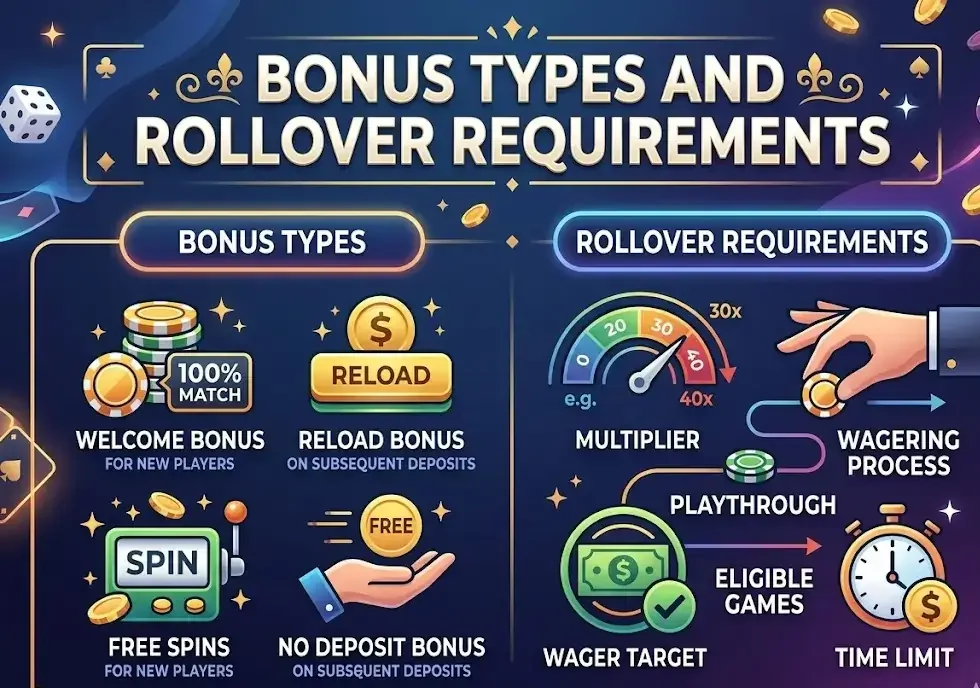
Offshore sportsbooks and casinos offer several categories of promotional incentives. Deposit match bonuses add a percentage of a player’s deposit as bonus funds, a 50% match on a $200 deposit adds $100 in bonus credits.
Free bets allow placing a wager without risking personal funds, though the stake is typically not returned on wins. Free spins provide a set number of slot machine spins at no cost, with winnings usually capped around $100.
Nearly every bonus comes with a rollover requirement, the number of times the bonus amount must be wagered before winnings become withdrawable. A 5x rollover on a $100 bonus means $500 in total wagers must be placed. Sportsbook rollovers are typically lower (5x–10x) than casino rollovers (25x–45x). Game contribution rates vary: slots usually contribute 100% toward clearing the rollover, while table games may contribute only 5–20%.
Odds Formats And Bankroll Discipline
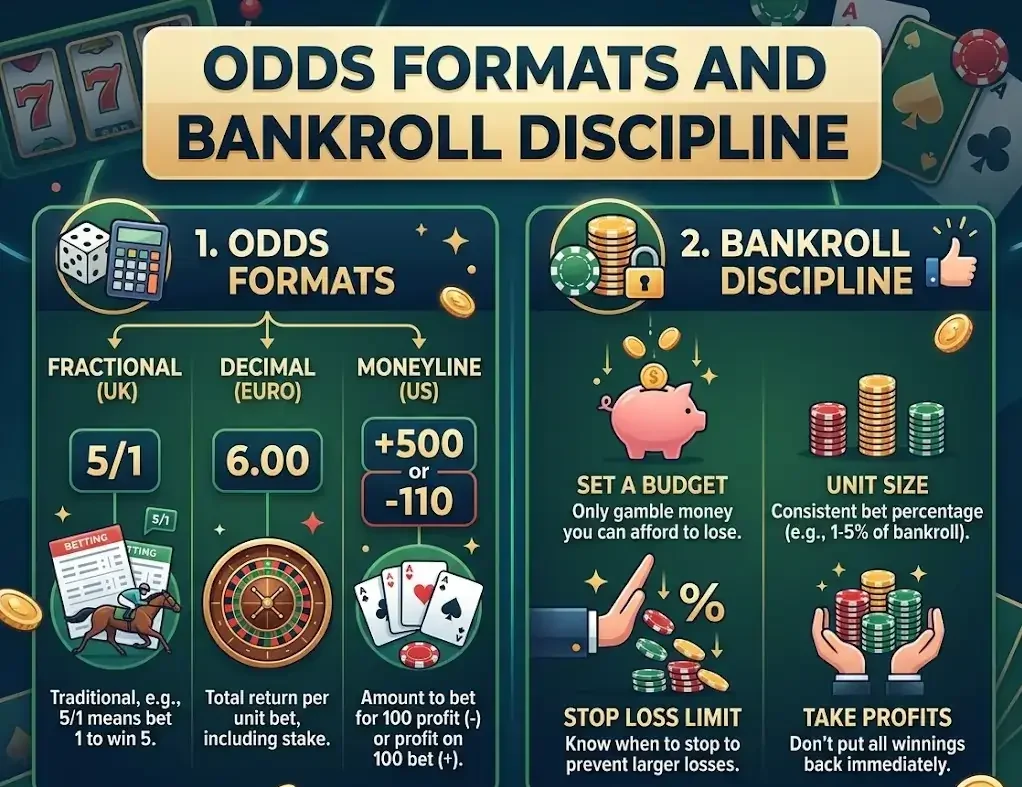
Offshore sportsbooks display odds in American format by default. A negative number (e.g., -150) indicates how much must be wagered to win $100, while a positive number (e.g., +200) indicates how much a $100 wager would return in profit.
The gap between true probability and the odds offered is the sportsbook’s margin, known as the vig or juice. Reduced juice markets, such as BetOnline’s -106 NHL lines versus the standard -110, offer better value over time.
Managing a fixed bankroll remains the most important discipline: experienced bettors typically risk no more than 1–3% of their total bankroll on any single wager. Setting a daily or weekly loss limit before beginning a session prevents emotional decision-making. Offshore platforms do not enforce mandatory loss limits unless a player manually sets them, making self-discipline the primary safeguard.
How Offshore Payments Work For Minnesota Residents?
Offshore platforms accessible to Minnesota residents support a range of payment methods. Credit and debit cards are widely accepted for deposits but may not always be available for withdrawals. Digital currency has become the dominant method due to faster processing and lower fees. E-wallets and bank-to-bank services like MatchPay (available at BetOnline and Bovada) provide a middle ground between card payments and digital currencies.
| Method | Deposit Speed | Withdrawal Speed | Available At |
| Credit/Debit Card | Instant | Not always available | All 5 platforms |
| Digital Currency | Near-instant | 1–48 hours | All 5 platforms |
| E-wallet / MatchPay | Near-instant | 24–48 hours | BetOnline, Bovada |
| Bank Wire | 1–3 business days | 5–15 business days | All 5 platforms |
Credit card deposits may incur fees of 3–8%. Offshore platforms are not subject to Minnesota banking regulations, meaning consumer protections available through state-licensed operators do not apply.
Types Of Sports Bets Available Through Offshore Platforms
Offshore sportsbooks offer Minnesota residents the full range of bet types available in regulated markets:
- Moneyline wagers on outright winners
- Point spread bets on the margin of victory
- Totals (over/under) on combined scores
- Parlays combining multiple selections
- Same-game parlays through tools
- Player props on individual statistics
- Futures on long-term outcomes, such as championship winners and MVP awards
- Live in-play betting with odds updating in real time.
Prediction Markets And Daily Fantasy Sports In Minnesota
Prediction markets have changed the landscape in 2025–2026. Platforms such as Kalshi, Polymarket, and Underdog allow Minnesota residents to purchase event contracts tied to sporting event outcomes, a mechanism that functions similarly to sports betting, though operators classify it as regulated financial trading under CFTC oversight. FanDuel and DraftKings have both launched prediction market products to enter restricted states like Minnesota.
The regulatory conflict has intensified. A coalition of 34 state attorneys general, including Minnesota’s, filed an amicus brief arguing that allowing the CFTC to preempt state gambling regulation would undermine state sovereignty. State Senator John Marty has vowed to pursue legislation to block prediction markets in Minnesota, calling them identical to sports gambling.
However, the CFTC has signaled it will resist state-level regulation. On Polymarket, Minnesota residents can already purchase contracts on outcomes including Wild Stanley Cup odds, Vikings game results, and political events, with pricing that closely mirrors traditional sportsbook odds.
The rise of prediction markets has introduced a new dimension to the legislative debate. Some lawmakers argue that the existence of de facto sports betting through event contracts eliminates the rationale for delaying legalization.
If Minnesotans are already wagering on sports outcomes through prediction markets, the state should regulate the activity and collect tax revenue rather than allowing federally regulated platforms to operate without state oversight or consumer protections. Others, including Senator Marty, argue the opposite, that the spread of prediction markets demonstrates the harms of expanding gambling access.
Popular Minnesota Sports To Bet On
The state’s four major professional franchises drive Minnesota sports betting interest among residents using offshore platforms.
Minnesota Vikings Betting (NFL)
The Vikings consistently generate the highest wagering volume among Minnesota teams. Point spreads, moneylines, totals, and player props on quarterbacks and receivers dominate weekly NFL action. Both BetOnline and Bovada offer extensive Vikings prop markets throughout the regular season and playoffs, with same-game parlay options covering rushing yards, receiving touchdowns, and defensive statistics.
Minnesota Timberwolves Betting (NBA)
Following back-to-back conference finals appearances, the Timberwolves attract significant national betting attention. Spread and totals bets drive most action, with player props seeing heavy volume on star players. The fast pace of the NBA season creates daily opportunities for live in-play wagering.
Minnesota Twins Betting (MLB)
Baseball betting centers on starting pitcher matchups, bullpen fatigue, and Target Field park factors. Moneyline and run line bets are the primary wagering formats. The 162-game regular season provides a steady stream of markets from April through October.
Minnesota Wild Betting (NHL)
Playing at the newly renamed Grand Casino Arena, the Wild maintain a dedicated hockey betting audience. Puck line, totals, and period-specific bets represent core wagering markets.
College Sports Betting In Minnesota
University of Minnesota Golden Gophers football and basketball programs, along with Big Ten conference matchups, attract consistent betting interest. SF 4139 would ban prop bets on individual college athletes if passed.
Sportsbooks Expected To Launch After Minnesota Legalisation
If the Minnesota Legislature passes a sports betting bill, several major operators are expected to pursue licenses, likely in partnership with the state’s 11 tribal nations.
| Operator | Status In Other States | Likely MN Approach |
| DraftKings | Active in 25+ states | Expressed interest in every legalizing state |
| FanDuel | Active in 25+ states | Already operates DFS in Minnesota |
| BetMGM | Active in 20+ states | Has pursued tribal partnerships elsewhere |
| Caesars Sportsbook | Active in 20+ states | Legacy brand with existing tribal relationships |
| ESPN BET | Active in 17+ states | Aggressive expansion under the Disney partnership |
| Fanatics Sportsbook | Active in 15+ states | Rapidly expanding with the FanCash rewards model |
Under the tribal exclusivity model proposed in SF 4139, each of the 11 tribes would receive one mobile sportsbook license and could either operate directly or partner with a commercial operator. This would result in a maximum of 11 licensed mobile sportsbooks in the state.
DraftKings Minnesota
DraftKings already operates daily fantasy sports contests in Minnesota and has expressed interest in every state that has legalised sports betting. The company’s existing user base in the state would give it a significant head start in customer acquisition. DraftKings typically launches with aggressive promotional spending and has pursued tribal partnerships in states with similar exclusivity frameworks.
FanDuel Minnesota
FanDuel operates DFS in Minnesota and has launched prediction market products targeting states without regulated sportsbooks. The company’s national market share, consistently the largest among US sportsbooks, positions it as a likely tribal partner. FanDuel’s same-game parlay product and live betting interface are widely considered among the strongest in regulated markets.
BetMGM Minnesota
BetMGM operates as a joint venture between MGM Resorts and Entain. The operator has pursued tribal partnerships in states like Arizona and has experience navigating exclusivity models. BetMGM’s casino-forward branding could appeal to tribal partners seeking to cross-promote sportsbook and casino products under one platform.
Sports Betting In States Bordering Minnesota
Minnesota’s neighbours provide useful context for the state’s position in the regional market:
| State | Sports Betting Status | Online Available? | Key Detail |
| Iowa | Legal since 2019 | Yes, full mobile and retail | DraftKings, FanDuel, BetMGM are active |
| Wisconsin | Tribal retail only | No online | Limited to select tribal casinos |
| North Dakota | Tribal retail only | No online | Available at certain tribal properties only |
| South Dakota | Retail only (Deadwood) | No online | Legal since 2021; limited to Deadwood casinos |
Iowa represents the fully mature model with both mobile and retail sports betting. Minnesota residents near the Iowa border can legally place bets by crossing state lines and using geolocation-verified apps, underscoring the economic revenue Minnesota continues to forgo.
Responsible Gambling Resources In Minnesota
Offshore platforms operate outside Minnesota regulatory oversight, making individual discipline the primary safeguard against problem gambling. Resources available to Minnesota residents include:
• National Council on Problem Gambling Helpline: 1-800-522-4700 (24/7, confidential)
• Minnesota Council on Problem Gambling: State-specific resources, referrals, and counseling connections
• Gamblers Anonymous Minnesota: In-person and virtual meetings held statewide
Establishing deposit limits, setting firm time boundaries, and never wagering more than is affordable to lose are essential practices. All helpline calls are confidential.
In 2026, the global online casino industry has placed a massive emphasis on player safety, integrating advanced technology to ensure that gaming remains a fun and controlled activity. Leading online casinos now utilize artificial intelligence and real-time behavioral tracking to help players identify potential issues before they escalate.
Whether you are using a casino app or playing through a desktop site, the best online casino options provide a comprehensive suite of tools designed to help you manage your time and budget. Practicing online gambling real money play responsibly is the only way to ensure a sustainable and positive experience.
Responsible Gambling Organizations In The US:
- 1-800-GAMBLER Helpline
- Gamblers Anonymous
- Gam-Anon
- Gambling Therapy
- National Council on Problem Gambling, NCPG
Frequently Asked Questions
1. Can you gamble online in Minnesota?
No. Online sports betting and online casino gambling are both illegal in Minnesota as of March 2026. The only legal online wagering involves daily fantasy sports contests (DraftKings, FanDuel, PrizePicks), prediction market contracts (Kalshi, Polymarket), and pari-mutuel horse racing simulcast through platforms like TwinSpires and TVG.
2. Will Minnesota get sports betting in 2026?
Passage in 2026 is possible but uncertain. Both chambers now have active bills, SF 4139 in the Senate and HF 4204 in the House, but the 67-67 House split and unresolved tribal-racetrack conflict make a 2027 or later timeline more realistic.
3. What are the latest bills to legalize sports wagering in Minnesota?
SF 4139 was introduced in the Senate on March 4, 2026, by Senator Nick Frentz with bipartisan co-sponsorship. A House companion bill, HF 4204, was introduced March 12 by Rep. Frazier. Both propose tribal-controlled mobile wagering with loss limits and a ban on college athlete prop bets.
4. What sportsbook apps are legal in Minnesota?
No sportsbook apps are legal in Minnesota as of 2026. Some residents use offshore sportsbooks such as BetOnline and Bovada through mobile-optimized websites. If legalization passes, operators like DraftKings, FanDuel, BetMGM, and Caesars would be expected to launch native apps under tribal partnerships.
5. What is the gambling age in Minnesota?
The minimum age is 18 at most tribal casinos and for charitable gambling, horse racing, and the lottery. Facilities serving alcohol may enforce 21+. Future sports betting legislation is expected to set the minimum at 21.
6. Who controls sports betting policy in Minnesota?
The state’s 11 federally recognized tribes hold the most influence through their existing gaming compacts. Horse racing tracks, professional sports teams, and legislators from both parties also play significant roles. No single stakeholder has been able to assemble a winning coalition.
7. How much tax revenue would sports betting generate in Minnesota?
Senator Jeremy Miller’s 2025 proposal estimated approximately $80 million annually at a 20% tax rate. Neighboring Iowa, with roughly half Minnesota’s population, generated $2.86 billion in total handle during fiscal year 2024.
8. What consumer protections are proposed in SF 4139?
The bill includes $500 daily loss limits, $3,000 monthly limits, a 72-hour default cooling-off period, a ban on push notifications from sportsbook apps, and a prohibition on prop bets involving individual college athletes.
9. Are prediction markets legal in Minnesota?
Yes. Prediction markets such as Kalshi and Polymarket operate under CFTC regulation and are currently accessible, though state legislators have proposed restrictions. A coalition of 34 state attorneys general has challenged the CFTC’s authority to preempt state gambling regulation.
10. What sportsbooks could launch after legalization?
Industry observers expect DraftKings, FanDuel, BetMGM, Caesars, ESPN BET, and Fanatics Sportsbook to pursue Minnesota licenses, likely partnering with the state’s 11 tribal nations.